
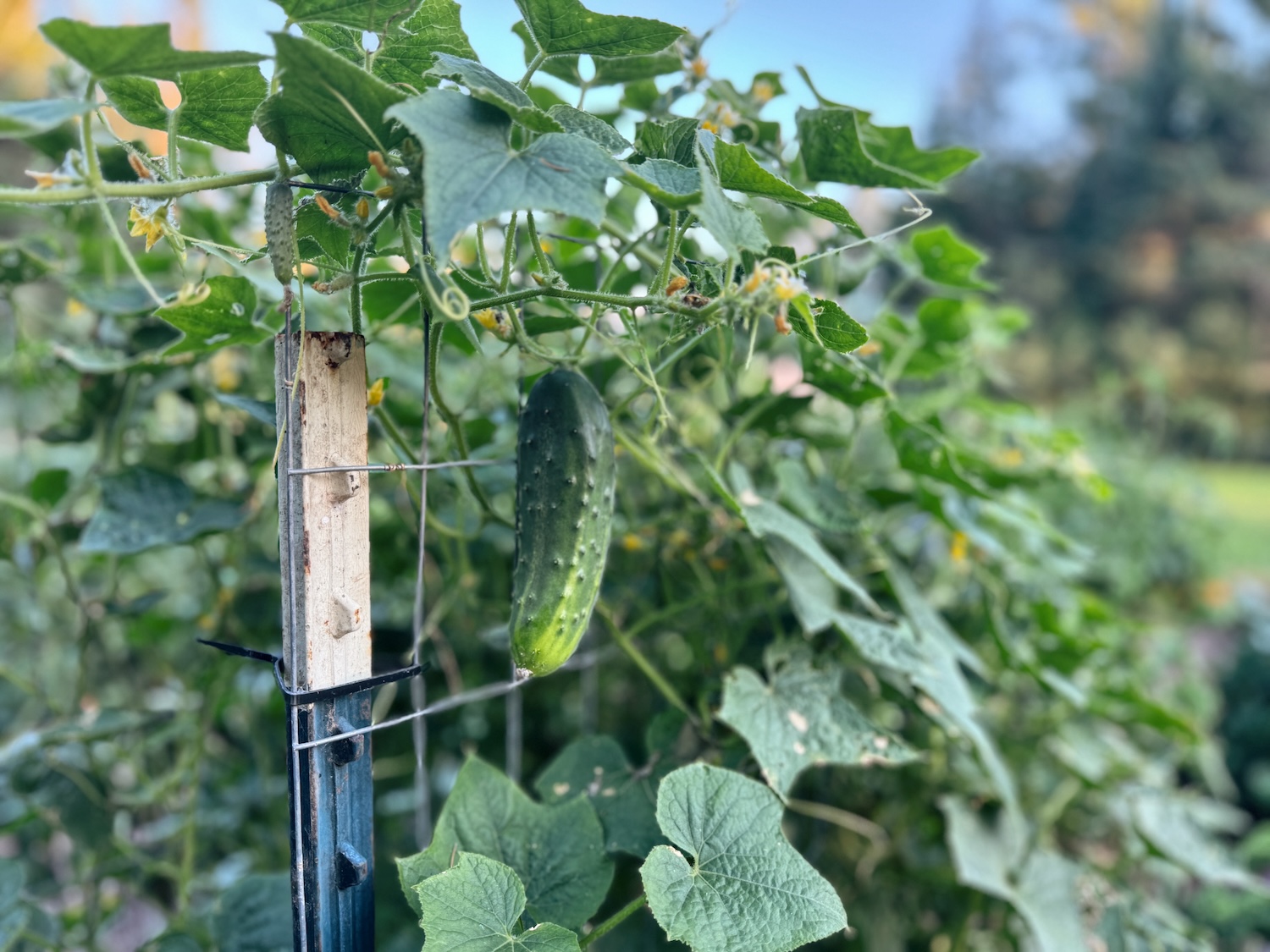
If you’re looking for the perfect companion for your cucumber plants, this article is for you! I’ve been growing food for over 15 years, and have experimented quite a bit with companion planting. In this article, I’ll fill you in on which plants will eagerly enhance the growth of your cucumbers… and which ones to steer clear of – there are a few!
Cucumbers are such a joy to grow as they are prolific (we only need 3 plants to feed the two of us all year!) and who doesn’t like delicious, zingy, electrolyte-replenishing pickles? If you haven’t tried my No Cook Refrigerator Pickles yet, definitely do! I’ve given up on canning pickles since these are SO easy and they keep for many months.
*Disclosure: This post may contain affiliate links to products (including Amazon). I’ll earn a small commission if you make a purchase through my link, at no additional cost to you! Regardless, I only link to products that I personally use on our homestead or believe in.
What is Companion Planting?
Companion planting is an effective gardening method that involves growing specific plants near each other to mutually benefit each other’s growth and health. Certain types of plants have properties that can positively (or negatively!) influence neighboring plants.
Benefits of companion planting
- Create a more diverse and resilient ecosystem
- Repelling pests
- Providing beneficial nutrients
- Improving soil quality
- Attracting beneficial insects
- Attracting pollinators
Another benefit of companion planting is that it allows you to get away with closer plant spacing – a definite win if you have a small garden (or if you’re a “greedy gardener” like me)!
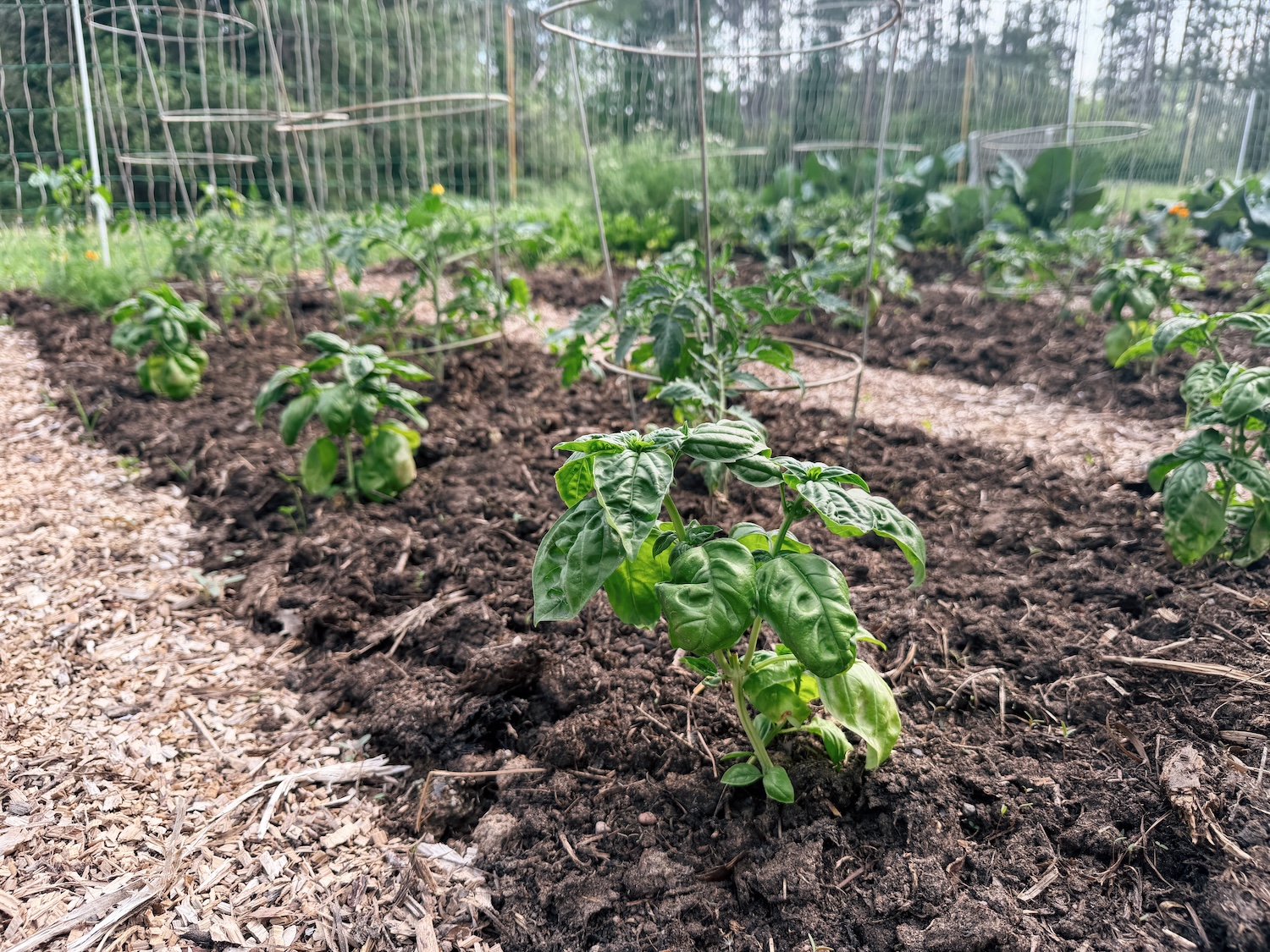
The 5 Best Cucumber Companion Plants
The good news is that cucumbers have more garden friends than they do foes, but let’s discuss their top 5 garden buddies!
#1: Peas
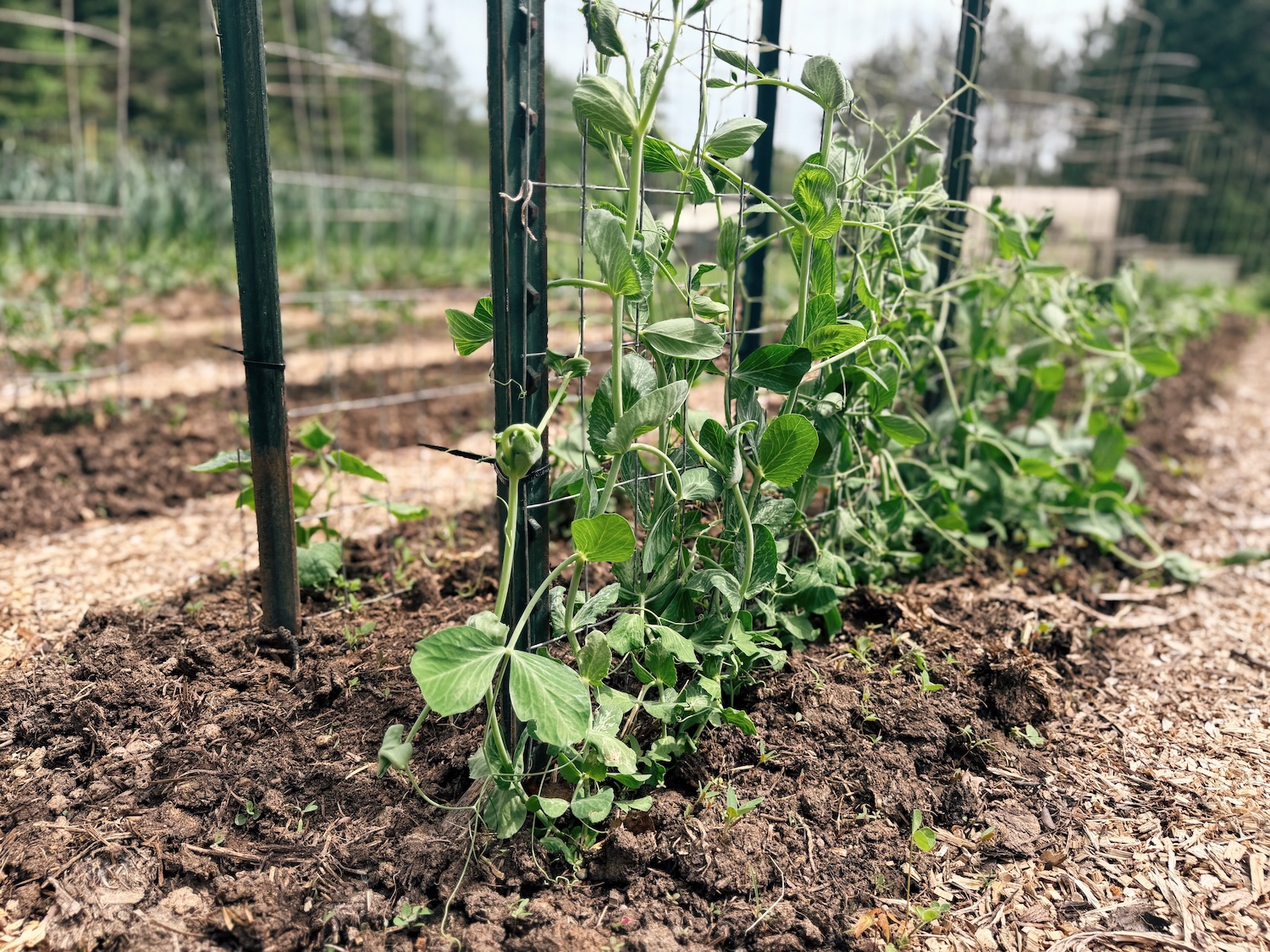
Peas and cucumbers make excellent companion plants, and this is the exact pairing that I’ve been using in my garden for the past few years. Both peas and cucumbers grow vertically (up a trellis is ideal), so they can easily share the same space.
The only thing to be mindful of is that they produce at slightly different times. Peas are a cool-season crop, so they’ll grow and produce a little sooner than heat-loving cucumbers.
Knowing this, I grow my peas on one side of my trellis and my cucumbers on the other (as shown in the photo below). This keeps harvesting simple and allows the cucumbers some space to catch up while the peas are thriving. Then, as the peas are dying back by mid-summer, the cucumbers have plenty of space to thrive. They form a great partnership, especially for those limited in space.
#2: Bush beans
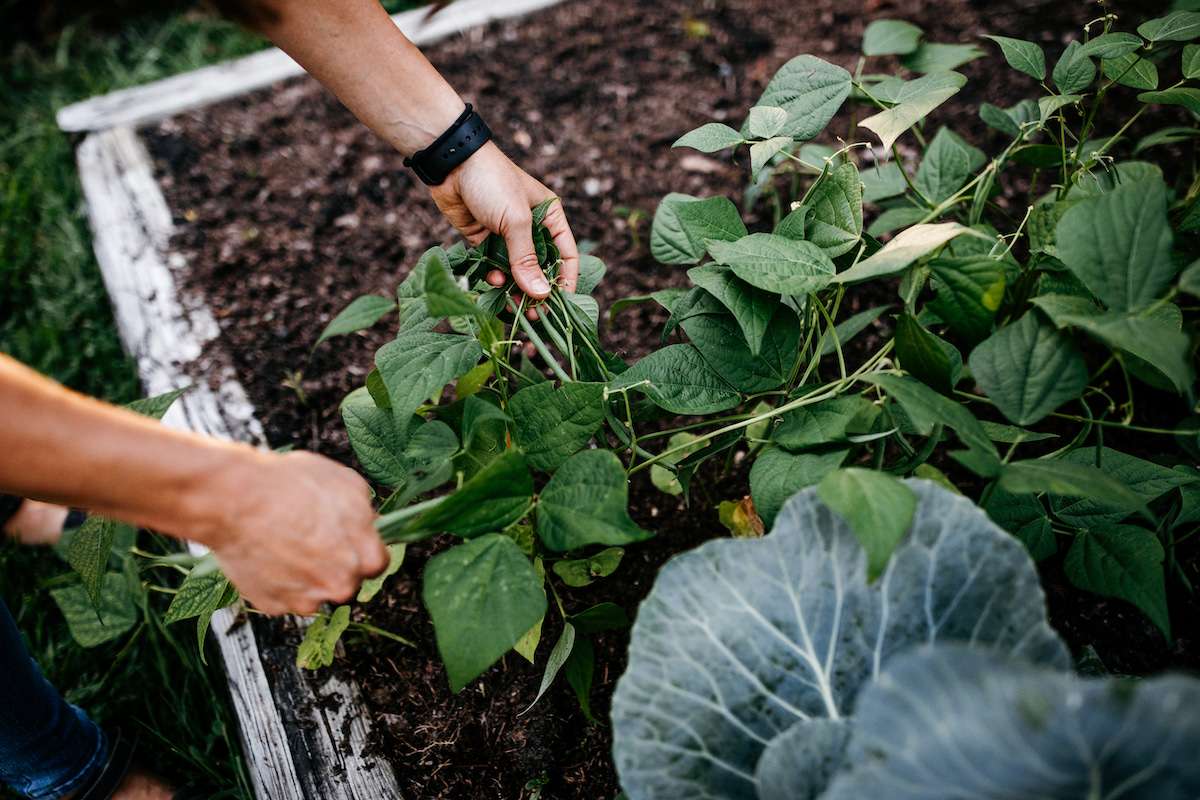
Bush beans are one of my favorite vegetables to grow, preserve, and eat. It’s an incredible plant! Beans are nitrogen fixers, meaning that instead of pulling nitrogen out of the soil, they actually replace it. This is exactly what cucumbers need in order to grow strong and thrive. What great teamwork!
However, not all beans are created equal. Pole beans can easily vine as high as 10 feet (requiring trellising), while bush beans grow low to the ground and don’t need any support. Bush beans are the best pick for companion planting with cucumbers.
They won’t compete for sunshine, their shallow roots won’t compete for nutrients, and their low, bushy growth provides a fantastic living mulch.
#3: Lettuce
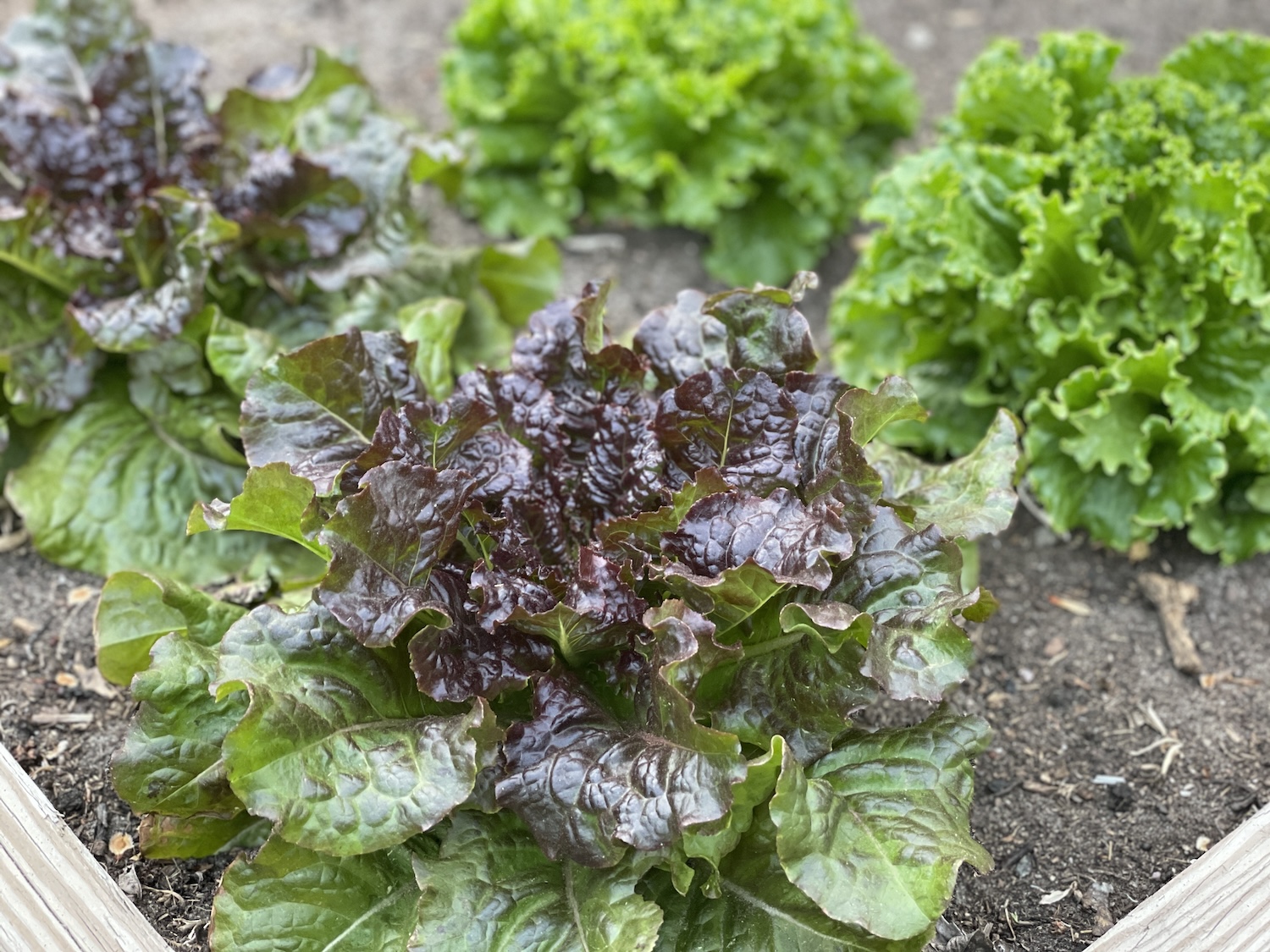
Lettuce is another great pick for companion planting with cucumbers, similar to bush beans. They have shallow roots and will provide a living mulch, which will limit weed growth and reduce watering needs. Lettuce also emits an odor, which can repel whiteflies.
Keep in mind that lettuce has a tendency to bolt when those hot summer temperatures kick in, so consider a bolt-resistant variety (Green Star and New Red Fire from High Mowing Seeds are my favorites!) to extend your harvest as long as possible. That reminds me of another positive of planting lettuce under the cucumber vines – the shade will delay their bolting a bit!
#4: Radishes
As a Minnesota gardener with a short growing season, I absolutely love using radishes for companion planting. Radishes have a very short growing period of only 3-5 weeks. This allows you to grow them in the empty space around a young cucumber plant and harvest them just as the vines start to take over.
The second reason that I love using radishes as a companion plant for cucumbers is that they repel cucumber beetles and act as a trap crop for flea beetles. Wahoo! There’s no bigger enemy to a cucumber plant than the dreaded cucumber beetle. Definitely add a protective circle of radishes around your cucumbers this year! 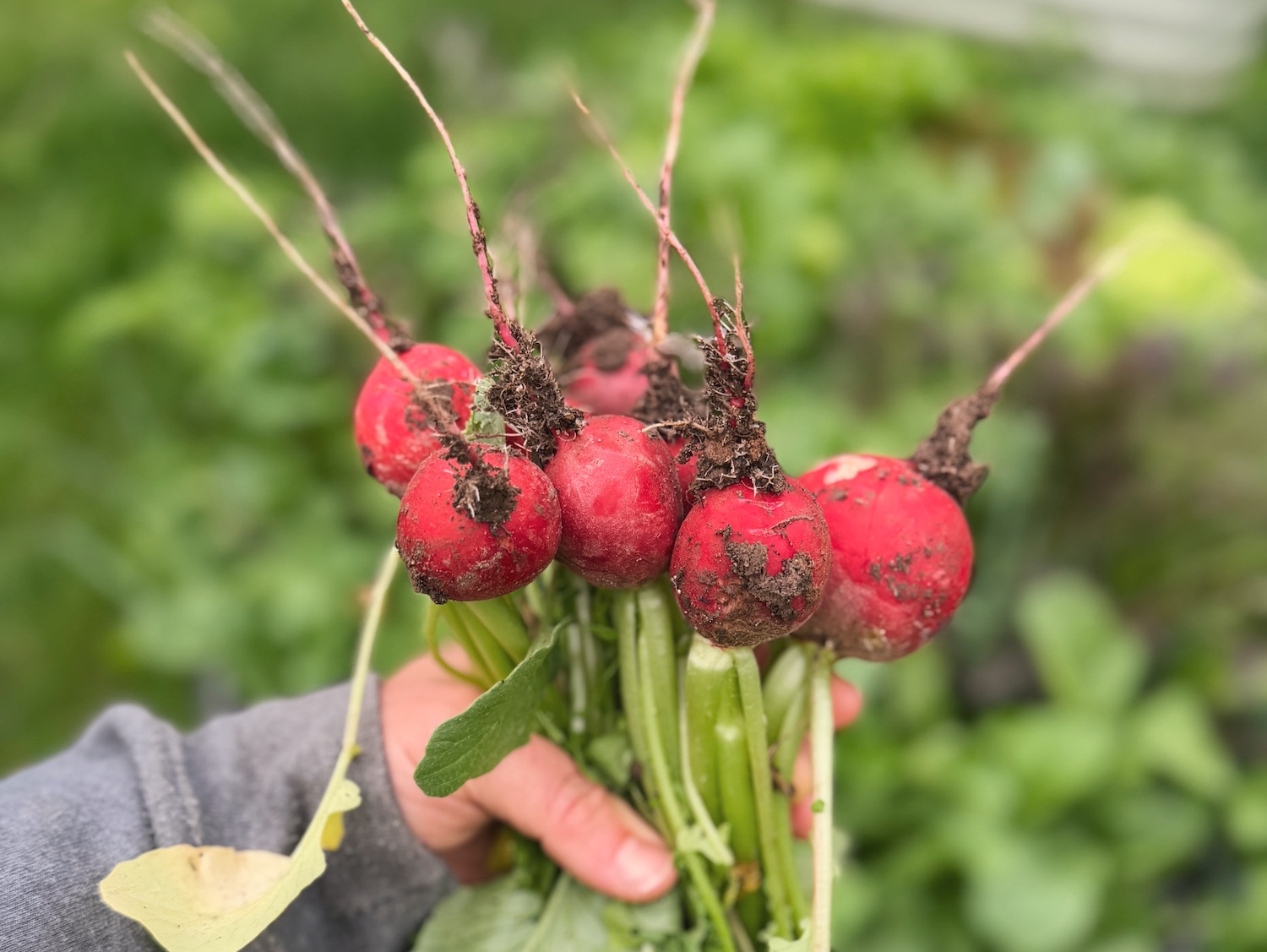
#5: Nasturtiums
Nasturtiums make my companion planting lists nearly every time, and for good reason! The colorful (and edible!) nasturtiums benefit most any plant out there! Here’s what they can do for your cucumber plants:
- Attract beneficial pollinators
- Attract beneficial predatory insects
- Can be used as a trap crop to keep the cucumber beetles off of your cucumber plants
- Provides a living mulch to reduce weed pressure and moisture loss

3 Plants to AVOID Planting With Cucumbers
Cucumbers have a few enemies in the plant world, so it’s best to keep these 3 vegetables away from your cucumber vines.
#1: Potato
Potatoes are the biggest enemy to cucumbers, so pay attention to this one! That’s because potatoes are a deep-rooted vegetable that can cause significant disruption to the delicate root system of cucumber plants. Cucumbers don’t like to be disturbed!
Not only will the development of tubers be disruptive, but so will the process of hilling the potato plants and then digging them out at harvest time. Lastly, both potatoes and cucumbers have high water and nutrient needs, so they will be competing for resources. It’s best to leave potatoes in their own designated area.
#2: Sage and Fennel
I listed sage and fennel together because they act the same way. They both have allelopathic properties, which means that they can negatively inhibit the growth and health of surrounding plants, and cucumbers are particularly susceptible. Keep sage and fennel off in their own area of the garden.
#3: Other Cucurbits
There are two reasons why you may not want to plant other cucurbits (melons, pumpkins, or squash) next to your cucumbers. First, these plants share similar vulnerabilities, making them susceptible to the same pests and diseases. If one of them gets hit, it can easily spread to the others.
Second, cross-pollination can occur, resulting in wonky cross-breeding between different varieties. However, this is only a concern if you plan to collect the seeds to plant the following year. If you’re always buying seeds from a seed supplier, then this is less of a concern.
Other Gardening Articles You’ll Love:
- Cucumber Leaves Turning Yellow? Here’s WHY & What to Do!
- Zucchini Companion Plants
- Eggplant Companion Plants
- Pumpkin Companion Plants
- Asparagus Companion Plants
- Dill Companion Plants
- Rhubarb Companion Plants
- Thyme Companion Plants
- Tomato Companion Plants
*Information in this article was referenced from personal experience and from my favorite gardening book: The Vegetable Gardener’s Bible, unless otherwise noted.
The Homesteading RD's Product Picks: | |

| This is THE gardening book to have! I've had my copy for over 10 years and it's the one that I keep going back to time after time. It provides design ideas for raised beds, compost bins, you name it! Plus helpful tables for pH ranges, companion plants and more. |
*Are you interested in starting a garden, but you’re overwhelmed with where to start? Or maybe you’ve tried a garden in the past, but it flopped? Definitely check out my course How to Plan a Garden: Step-By-Step! Don’t forget my discount code THRD10 for 10% off!